Behind the Menoreh hills and the calm Progo River, lies a wealth of traditional culinary delights that tantalize the tongue and evoke memories of the past. Kulon Progo is not just a natural destination, but also the birthplace of authentic flavors that are now sought after by tourists from all over.
Geblek & Tempe Besengek – An Inseparable Legendary Duet
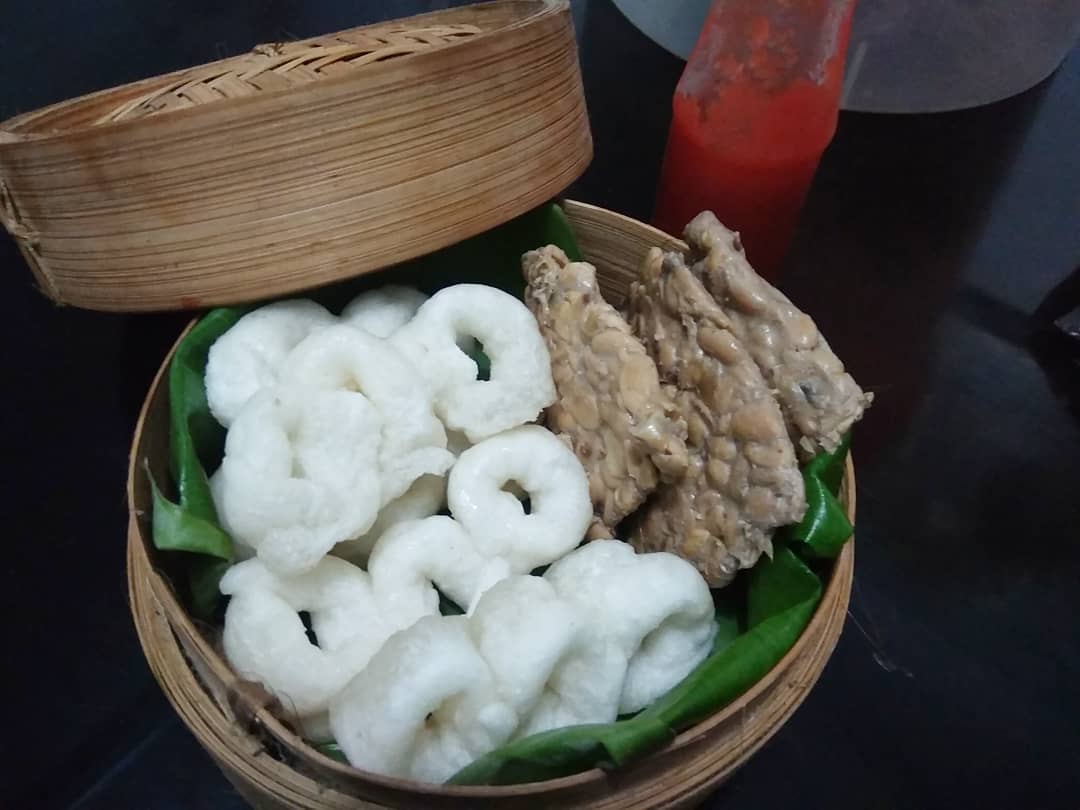
Geblek is the icon of Kulon Progo: chewy white fried food made from tapioca flour and garlic. Served warm, it has a mild savory taste. What makes it special is its partner—tempe besengek.
Tempe besengek is processed tempeh with thick coconut milk and spices such as galangal, coriander, and bay leaves. It’s savory and slightly spicy, making it a perfect side dish or accompaniment to geblek.
It can be found at Wates Market, Sentolo Market, and traditional stalls around Pengasih and Nanggulan, as well as at village celebrations.
Growol & Kethak – A Classic Duo That Has Now Goes Viral
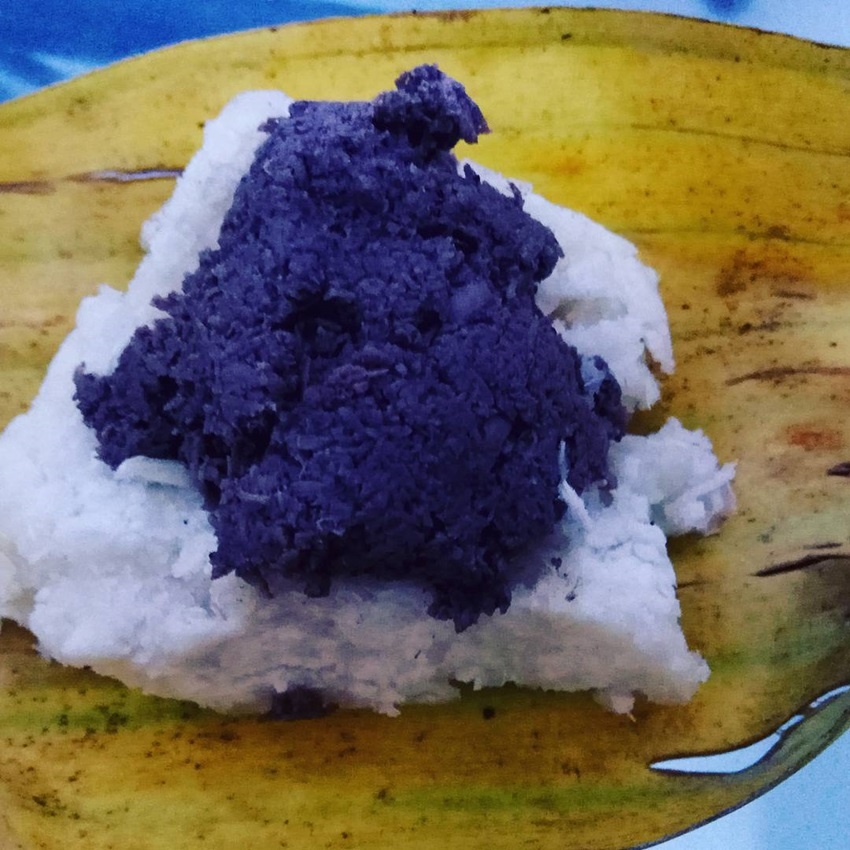
Growol is sliced fermented cassava served with grated coconut. It has a sour-savory taste and is very distinctive. It is usually paired with kethak—fried dry tempeh semangit with a sweet and spicy seasoning. These two are a traditional breakfast pairing that has become increasingly difficult to find, but is now making a comeback.
Where can you find them?
Try stopping by Sentolo Market, Wates Market, or look for them at traditional stalls around Pengasih and Nanggulan Districts in the morning. Many locals sell growol & kethak as a typical country breakfast menu.
Dawet Sambel – An Unexpected Spicy Sensation
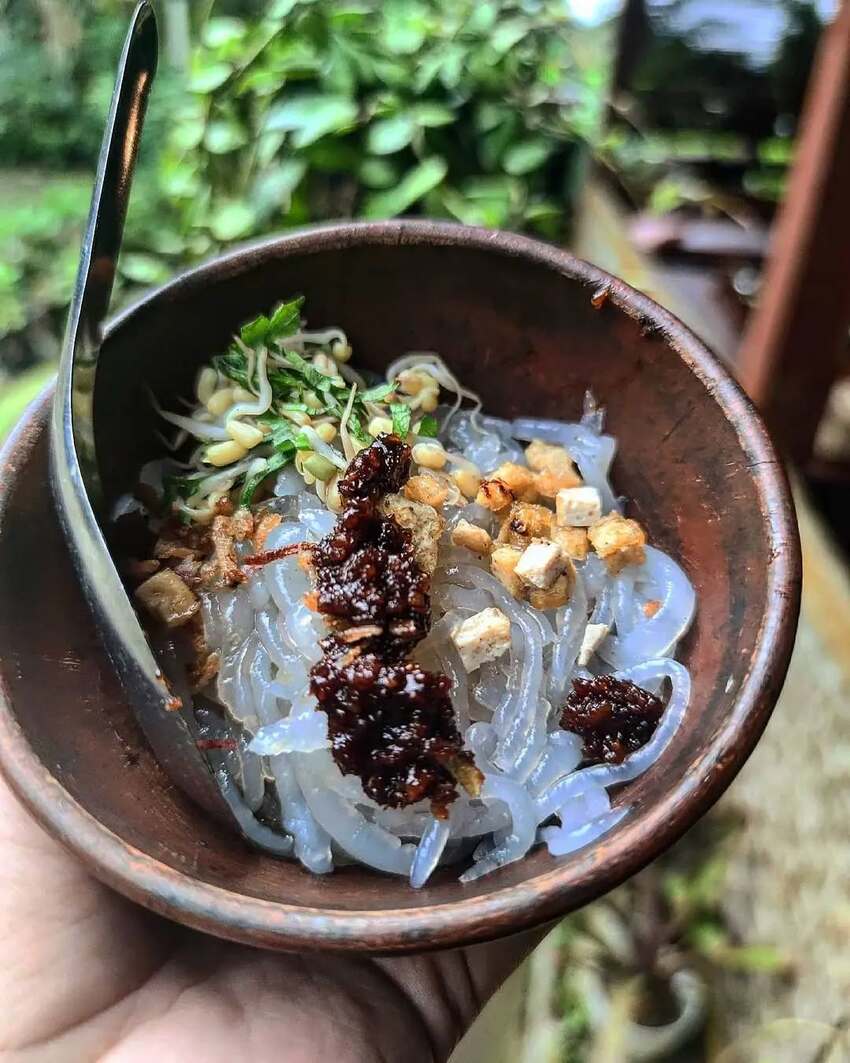
Unique and extreme, dawet sambel can only be found in Kulon Progo. Instead of being sweet, this dawet is served in a spicy onion sauce. Made from chewy starch cendol, and drizzled with a chili-based sauce, garlic, and a hint of tamarind. The taste is savory, spicy, fresh, and really piques tourists’ curiosity.
Where can you try it? This menu is not widely sold, but can be found in several places, including: Pripih Hamlet, Banjarasri Village, Kalibawang – Local sellers usually sell dawet sambel in the morning. Also occasionally present at local culinary events or Pasar Tiban (traditional impromptu market) around Menoreh.
Wandene Mbah Sri Manthe – A Village Kitchen Heritage That Is Increasingly Sought After
Located in the Kalibawang area, Wandene Mbah Sri Manthe has become an icon of home-cooked village cuisine. Wandene is a simple coconut milk vegetable soup served with savory and crispy fried wader fish. Eaten warm with rice, this side dish brings back the feeling of childhood and the warmth of hometown. The atmosphere is simple but very authentic and full of hospitality.
Mangut Beong – A Taste of the Progo River
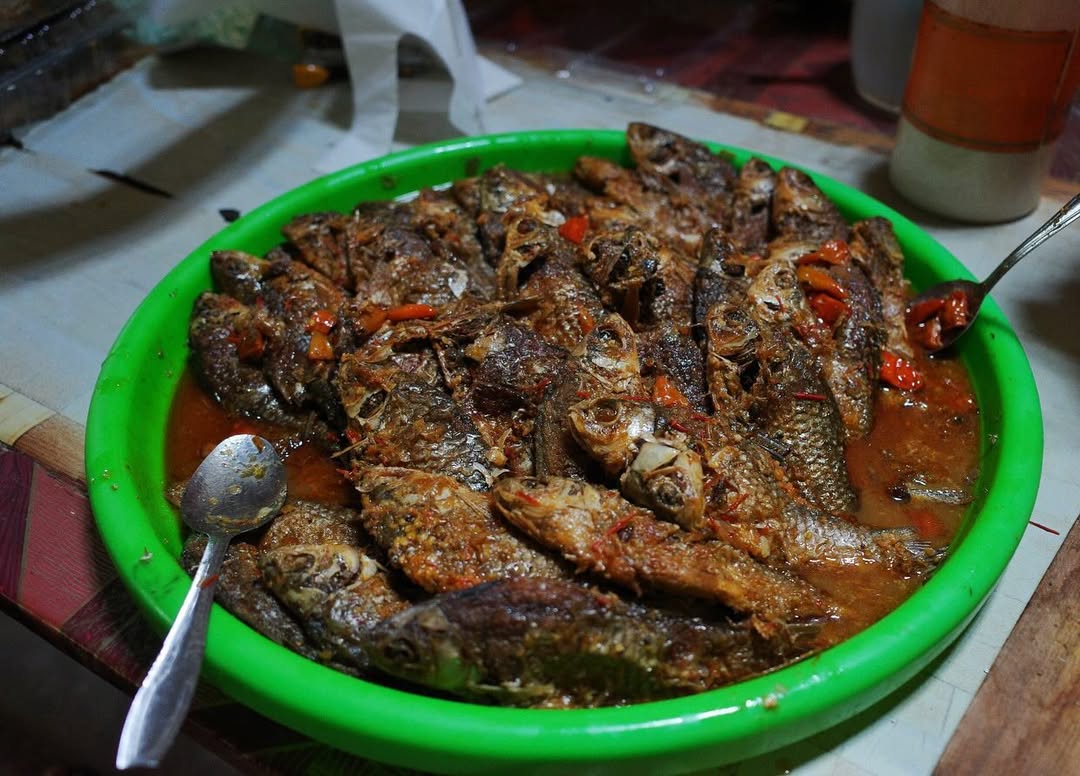
Beong fish, typical of the Progo River, is cooked into mangut—a spicy coconut milk sauce with a sharp aroma of spices. The soft and savory beong meat provides a unique dining experience, especially when eaten with hot rice and fresh vegetables.
Can be found in the Kalibawang area, especially near pilgrimage and religious tourism areas such as the Tomb of Nyi Ageng Serang.
Wedang Ronde Menoreh – Warm Up a Cold Night
On cool nights, especially in the Menoreh highlands, Wedang Ronde is the best companion. Brown sugar ginger sauce combines with sticky rice balls filled with peanuts and palm fruit, making for a soothing ending after a day of exploring flavors.
Kulon Progo isn’t just about the sights—it’s about experiencing the stories in every bite. From the legendary geblek, the satisfying growol & kethak, the intriguing dawet sambal, to the nostalgic wandene, all demonstrate one thing: in Kulon Progo, taste is part of the soul.